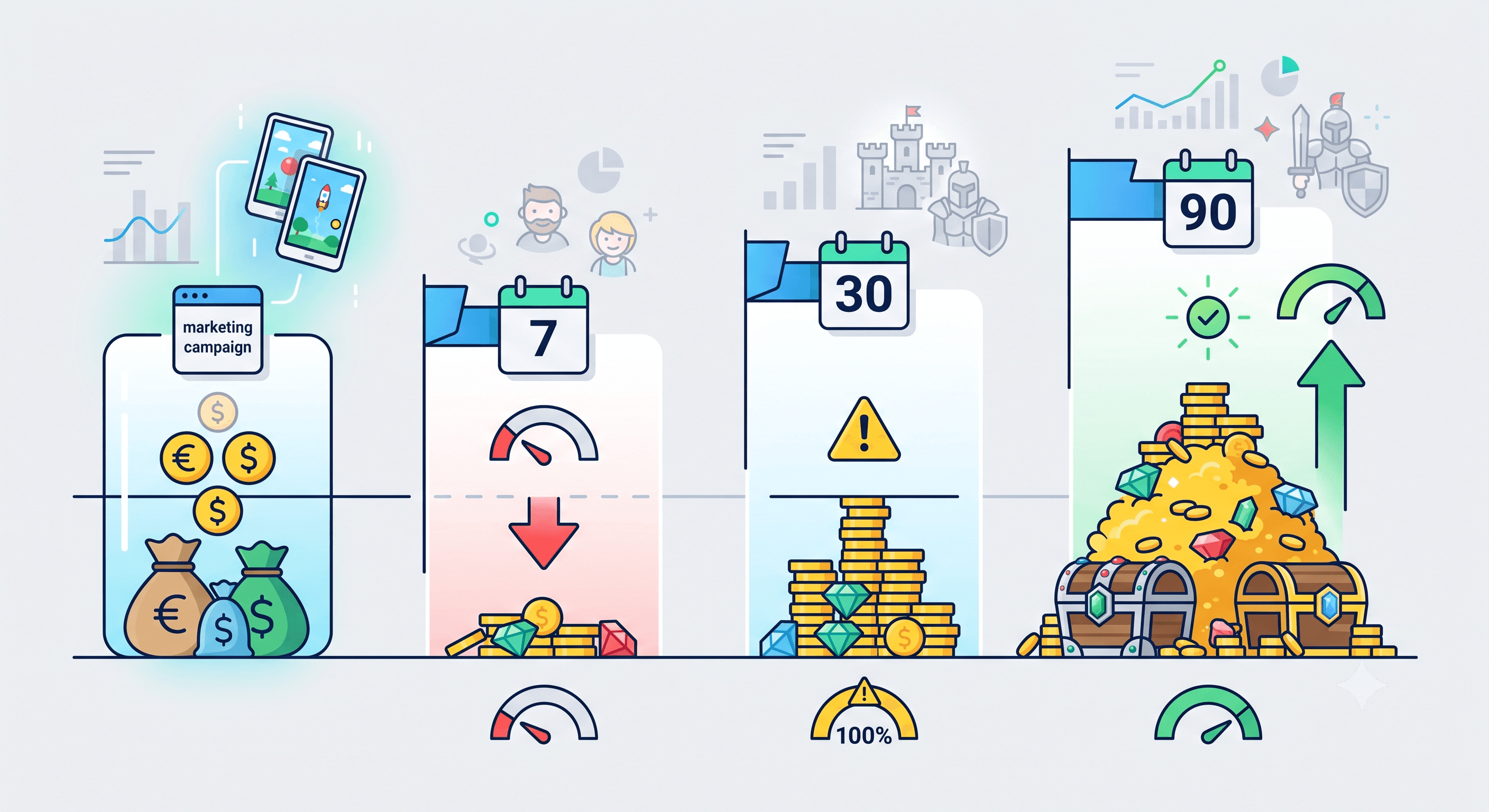
In 2025, mobile game studios spent about $25 billion on user acquisition, showing how competitive and resource-intensive this space has become.
But if your UA performance has been slipping, don't worry, it's not over yet. And it's not because of traffic either.
“Google traffic is worse.”
“Facebook is full of bots.”
“Programmatic is just click farming.”
But actually (and sorry to drop this on you), most mobile UA traffic today is fundamentally the same. What separates winning studios from struggling ones isn’t where they buy traffic, it’s how they optimize it.
Let’s break that down.
70% of Mobile UA Traffic Is the Same Everywhere
Across Google, YouTube, Search, Meta, Unity, DSPs, and programmatic networks, there’s an operational truth that’s uncomfortable but important:
👉 Most mobile UA traffic comes from the same limited supply.
Why? Because there are very few real ad supply sources: ultimately, its the same;
Apps
Placements
Exchanges
And the same users are moving between platforms
This is because Google brokers traffic, Meta brokers traffic, and programmatic brokers traffic.
This means you might have different dashboards, but it's the same ecosystem.
A useful mental model:
Imagine a large pool full of colored ping-pong balls. That pool is the available traffic. Your job isn’t to find a new pool; it’s to build stronger levers to pick the right balls.
When performance drops, it’s rarely because “this channel is bad.” It’s typically because your creative, signals, or optimization aren’t strong enough to extract value.
“But what about click farming and fraud?”
Yes, fraud exists, and click farming is absolutely real, but fraud doesn’t kill performance; weak optimization does.
Every major platform already fights fraud aggressively because it hurts their business too. The difference is that some platforms squeeze value harder than others.
Unity, for example, leans heavily into:
AI-driven optimization
Event-based learning
Sub-source control
Iterative creative testing
That doesn’t mean Unity traffic is “better”.
It means teams using Unity correctly extract more value from the same base traffic.
A Quick diagnostic for mobile marketers: Is it really the traffic?
Before blaming the channel, ask this.
If traffic quality were truly the problem, you’d see:
One channel is collapsing while others perform well
Strong retention but weak installs
Stable post-install metrics with volatile CPI
If optimization is the problem, you’ll see:
Weak post-install events everywhere
CPI volatility across all channels
Creative fatigue with no clear winners
Algorithms struggling to learn
For most studios, it’s the second list.
The Real Performance Levers
When CPIs rise or ROAS drops, studios panic and jump channels. It's a common mistake but high-performing UA teams do the opposite; they go deeper.
1. Block Bad Sub-Sources Aggressively
Not all traffic within a channel performs equally.
If you’re not:
Analyzing sub-source performance
Blocking underperforming placements
Feeding clean signals back into the algorithm
…you’re training the system to waste your money.
2. Creative Is Still the #1 Optimizer
Traffic doesn’t convert, creatives do. In recent times, hand-drawn creative is making a comeback.
Winning teams:
Build multiple creative angles per audience
Kill assets fast
Double down on what actually drives post-install events
If your creatives are generic, copied from competitors, or rarely refreshed, no channel can save you.
3. Optimize for Events, Not Installs
Installs are cheap, but the value is expensive.
Platforms optimize better when you:
Test early funnel events (tutorial complete, level reached, add to cart)
Move toward deeper signals once volume allows
Actively validate event quality
If you only optimize for installs or CPI, you’re teaching algorithms nothing useful.
4. If Traffic Is “Too Expensive”, Fix Your Conversion Rate
This is the part teams hate hearing. If prices go up, you have three options:
Stop spending
Complain about traffic
Improve conversion rate and LTV
And only one of those scales.
Better app store optimization (ASO), better onboarding, better early gameplay, better creative-message alignment, these are UA problems, not product afterthoughts.
The Hard Truth About Mobile UA Traffic
Traffic quality isn’t collapsing. Standards are rising.
The studios winning today aren’t finding magical channels. They’re:
Training algorithms correctly
Feeding platforms clean data
Iterating creatives relentlessly
Treating conversion rate as a growth lever, not a design detail
Same traffic. Same platforms. Very different results.
Final Thought
If your UA performance is struggling, don’t ask: “Where should we buy traffic instead?”
Ask: “Why isn’t this traffic working for us?”
That’s where real growth starts.
FAQs
Is mobile UA traffic really the same across platforms?
In practice, most traffic comes from overlapping supply sources. Platforms differ in tooling and optimization power, not in some hidden “premium” user base.
What about fraud and click farming?
Fraud exists, but for most studios, it’s not the primary performance limiter. Weak signals, poor creative, and shallow optimization cause far more damage.
When should you actually change channels?
When you’ve hit volume ceilings, need new formats, or are expanding geos — not as a reaction to poor performance fundamentals.
What’s the first thing to fix when UA performance drops?
Creative quality, signal choice, and conversion rate — before touching budgets or channels.

Mobile gaming UA specialist since 2011. A female pioneer in the industry, Maria has scaled games across every major platform and genre, from indie puzzle games to massive strategy titles. Known for straight talk and results that actually matter.
Share
Related Articles