
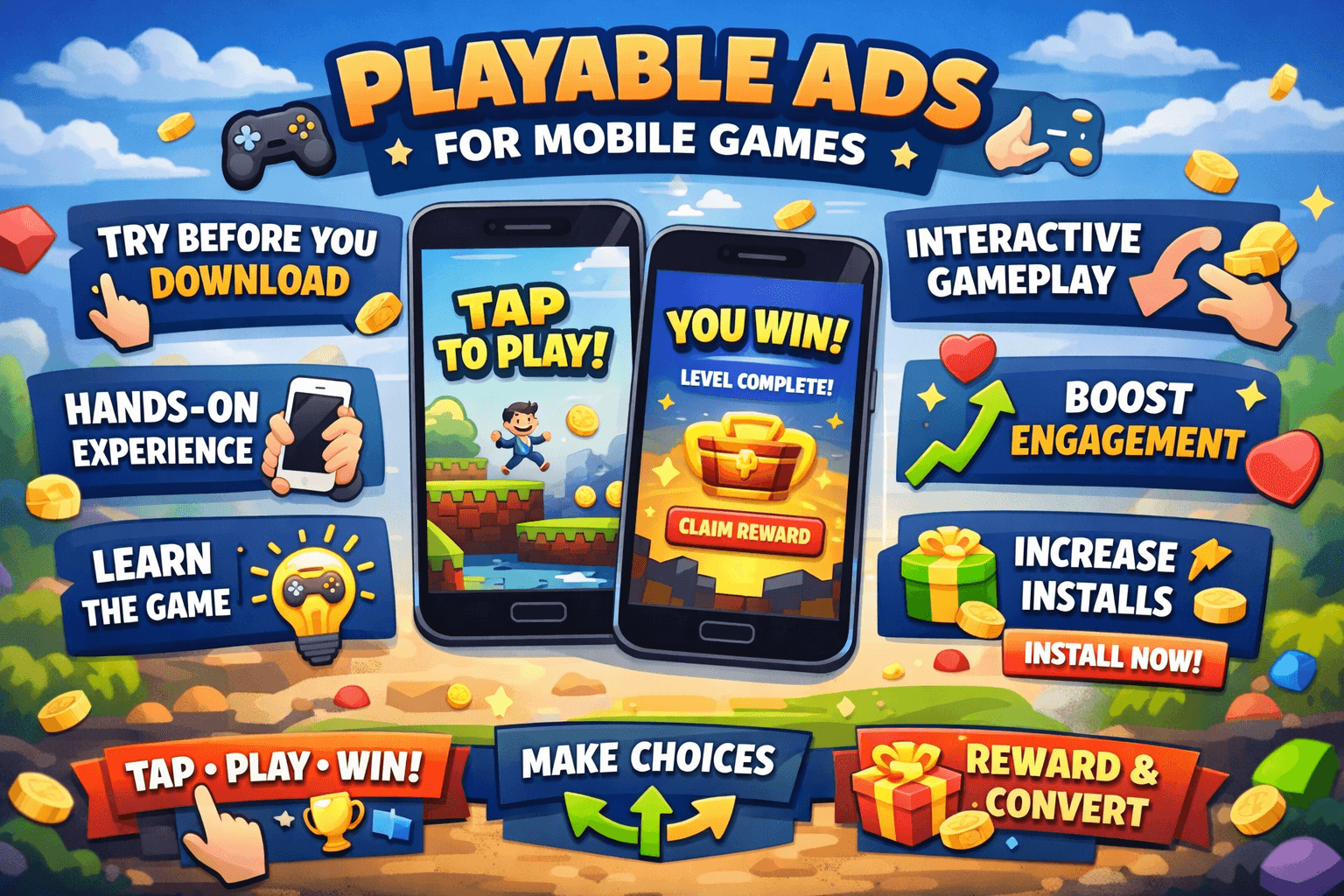
Mobile ads are getting messy, on purpose and the crazy thing is, they are winning just because of it.
In 2025 AI found their way into creative production and accelerated creative output to never before seen levels, mostly at the cost of quality creatives. But at the turn of the year, a new trend, a new anti-ai movement has surfaced to counter the sheer mass of AI generated creatives.
Among the hyper-polished, AI-generated videos, perfect lighting, flawless motion, algorithm-approved hooks, you’ll increasingly see ads that look… off.
Hand-drawn characters, paper cut-outs, shaky camera footage, awkward typography, visual glitches or pure DIY footage that feel accidental rather than engineered.
So where is this all coming from, it can’t just marketers that are fed up with too much AI slop. No, it also stems from the current wave of nostalgia that we see throughout the pop culture landscape. Not only movies, TV series but also fashion all inspired by the late 80’s, 90’s and now the 2000’s are heavy contributors for that.
This isn’t nostalgia for nostalgia’s sake. It’s a creative counter-movement that reflects the past, and one that's working commercially too. Think Stranger Things, for example, from Netflix. Kate Bush's 1985 song "Running Up That Hill (A Deal with God)" became a global phenomenon after being featured prominently in Season 5 of Netflix's Stranger Things. And it's happening across the board, including in gaming. Ads that spark connection as they evoke memories and feelings of the ‘good ol times’ in audiences are working!
So do mobile teams adapt to survive attention economics? Today, we're talking about why analogue visuals work and what this shift demands from UA, growth and creative teams.
Why Audiences Are Pushing Back on AI Ads (Without Saying “AI”)
The general public isn’t holding philosophical debates about generative models. Their reaction is simpler, and more dangerous for marketers.
They’re simply bored.
AI has done what automation always does at scale: it compresses variation and finds a way to deliver at scale but all of that with a cost, the cost of creativity and originality.
When thousands of advertisers use the same tools, prompts, templates, and pacing models, feeds flatten into a single visual language, it basically becomes vanilla flavoured creative content. Perfect, fine but unexciting as it misses dynamic and warmth. Reality isn’t perfect, but AI is giving that - hence losing all excitement factors.
As a result the key friction points audiences feel are the following. Most of them are even felt often subconsciously:
Predictability: AI creatives optimize toward familiar structures, not surprise.
Synthetic polish: Perfect motion and lighting no longer signal quality, they signal ads.
Emotional flatness: AI excels at surface-level appeal, but struggles with lived texture and emotional connection.
Trust erosion: Hyper-clean visuals trigger skepticism faster than curiosity.
The result? It becomes a hard pass for the audience.
The Return of Analogue Is Not Anti-Tech, it’s Anti-Generic.
Let’s be clear: this isn’t a moral revolt against AI, it’s a performance response to creative homogenisation.
Analogue-style assets, hand illustration, paper textures, real cameras, imperfect motion, reintroduce what algorithms squeezed out:
Human inconsistency
Tactile cues
Visual risk
Signals of effort and intent
These elements break feed patterns. They don’t look “optimized,” and that’s exactly why they work and why they stand out. If everyone can create perfection, imperfection becomes the exception.
In attention economics, difference beats quality once quality becomes a generalized norm.
Why Imperfect Visuals Win the Thumb-Stop in mobile advertising?
1. Pattern Interruption Beats Production Value
Feeds train users to recognize ads instantly. Analogue visuals disrupt that recognition loop for audiences. The person pauses because the brain can’t immediately classify what it’s seeing. Bonus points if the content is natively adapted to the feed the user sees.
2. Memory Encoding Is Stronger With Texture
Grainy, uneven lines, mismatched fonts, and real-world lighting create sensory anchors. These cues improve recall amongst audiences, not because they’re beautiful, but because they’re distinct.
3. Imperfection Signals Effort
Audiences subconsciously associate “rough” with made, and “perfect” with generated. That perception changes how much cognitive attention an ad earns. (Hmmm, a lot of other industries could learn a thing or two from this.)
4. Emotional Readiness Is Higher
People don’t emotionally connect with polish; they connect with intention. Analogue aesthetics have more propensity to create human connection. And in addition, if it’s blast from the past, emotional triggers and memories come into play as well.
Where This Strategy Breaks (and Many Teams Get Burned) ⚠️
Perhaps it isn't a matter of humans or AI, but both? The problem with human-only generated ads has risks as well. Those include;
Performance Risk
“Real” visuals don’t magically convert. Without strong hooks, pacing, and product clarity, analogue ads can underperform fast, especially at scale.
Production Cost Tension
Handmade assets resist automation. They require illustrators, animators, real shoots, and iteration cycles that don’t fit AI-speed expectations.
Scalability Limits
Once analogue styles become templated, they lose credibility. Nostalgia collapses when it starts looking mass-produced.
Measurement Pressure
Creative teams still need to prove results. CTR, IPM, retention, and ROAS don’t care about aesthetics; they care about outcomes.
So how do UA and creative teams approach the challenge?
What Winning Teams Are Doing Differently
The smartest mobile teams aren’t choosing AI vs analogue, they will be looking at utilizing both and let every tool, every creative idea and technology shine in their own way.
What works in practice:
Using AI for iteration and testing, not final expression
Reserving analogue styles for hero concepts, not infinite variants
Investing in creative direction, not just asset production
Measuring emotional performance alongside click metrics
Accepting slower production in exchange for longer creative half-life
Think of AI tools as tools, not as replacements for human or creative work. Think about utilising generative AI as any digital tool, for enhancement, for scale, but not as a creative engine.
Example: Duolingo’s “Low-Fi, Human” Creative Turn
A few years ago Duolingo leaned heavily into this trend.
Duolingo;
Leaned into hand-drawn elements, awkward motion, chaotic pacing
Used deliberately low-fi visuals that felt improvised, not optimized
Often broke “best practices” around polish, framing, and typography
Why it's relevant to UA teams:
Duolingo didn’t scale one imperfect ad
They built a creative system where imperfection was consistent but not templated
Performance was protected by:
strong hooks
fast pacing
very clear product signals
In fact, they did it so well that Effecto copied them.
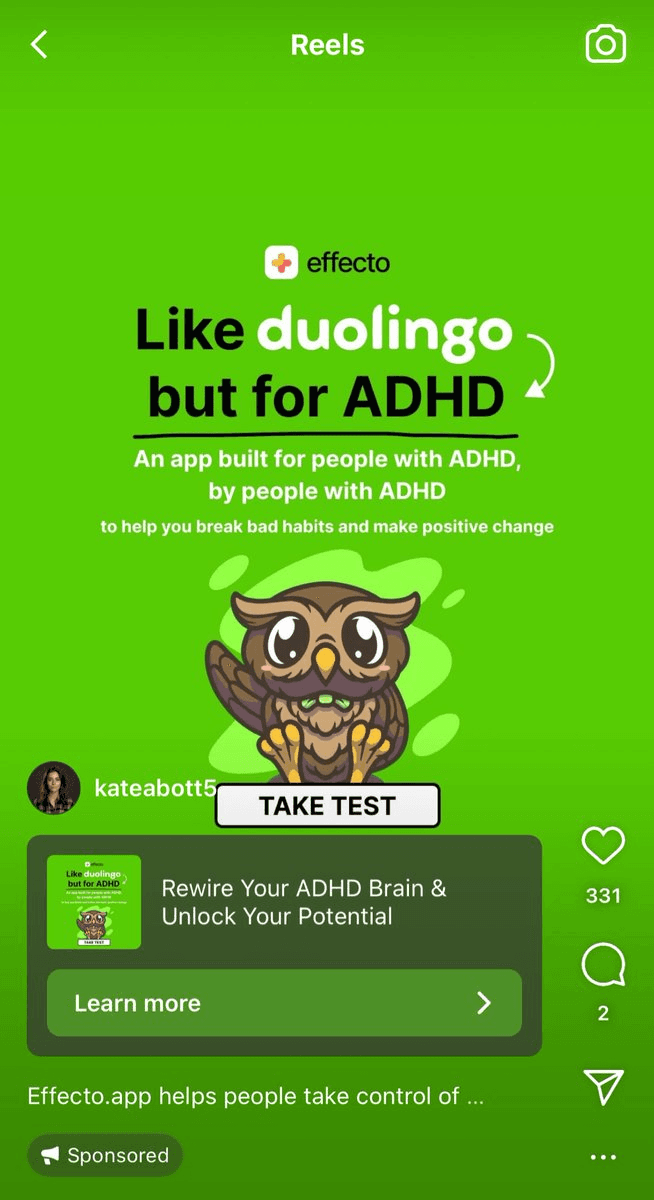
We also love these hand-drawn mobile ad examples from Vita Mayong;
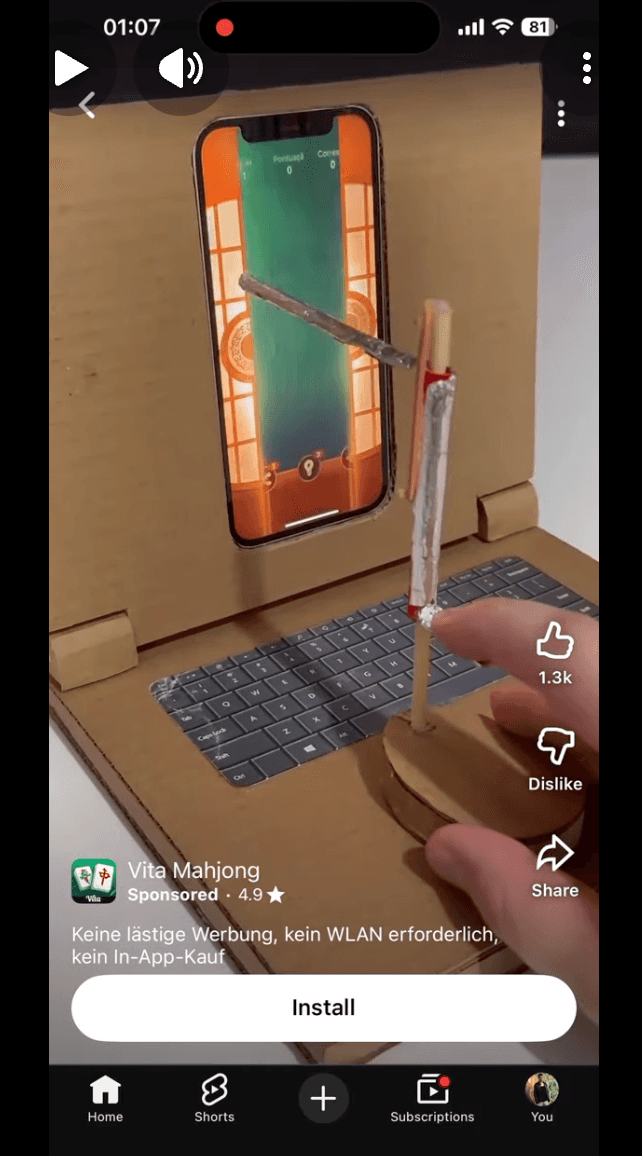
And this example from X-Clash
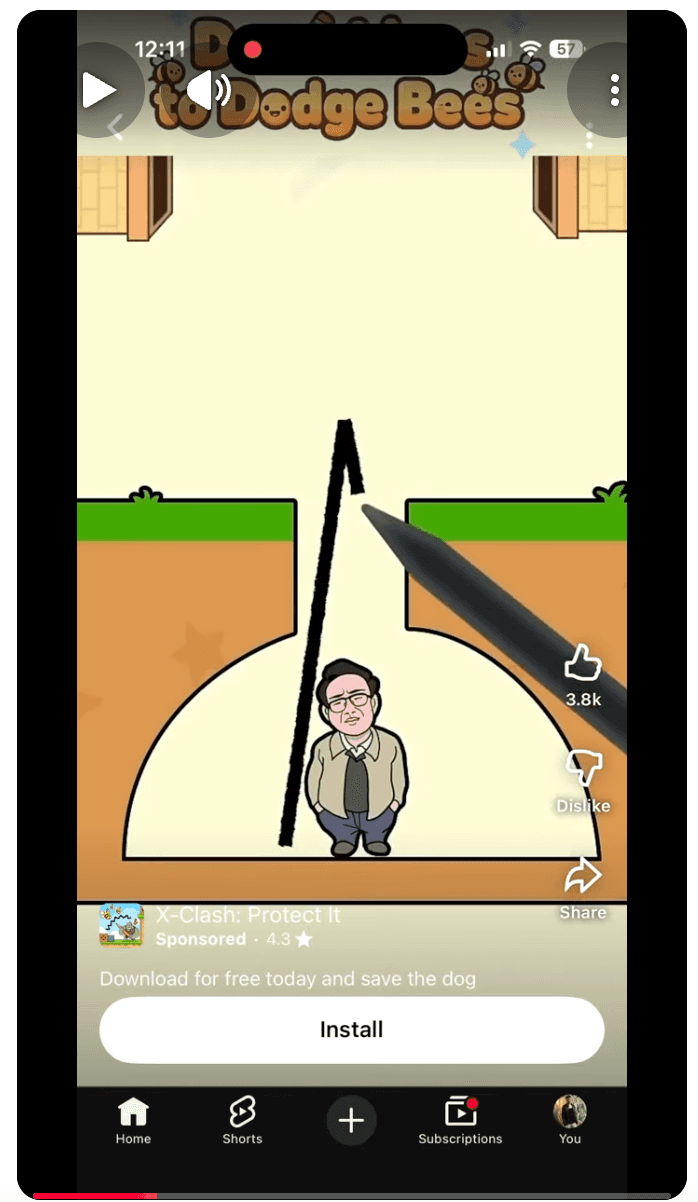
Escaping the Template Trap for Mobile App Ads
Human-inspired creativity (and even the use of influencers that are relatable) helps brands:
Escape creative fatigue and visual sameness
Win thumb-stop moments with unexpected cues
Trigger memory faster than polished AI visuals
Rebuild a sense of craft, intent, and individuality
This helps in reintroducing friction, just enough, to feel human again.
Final Take
We can't help but use AI. It's become a way to scale but AI is fragile when scaled without taste. But this shouldn't come at the expense of creativity.
The return of messy, imperfect, analogue-looking mobile ads isn’t a trend, nor is it a step backwards. It's a helpful step towards human connection and rewards teams willing to accept risk, slow down production, and think beyond templates.
The challenge of marketers isn't whether to use AI or not, its how not to lose the connection and become generic or irrelevant.
Related Articles


