
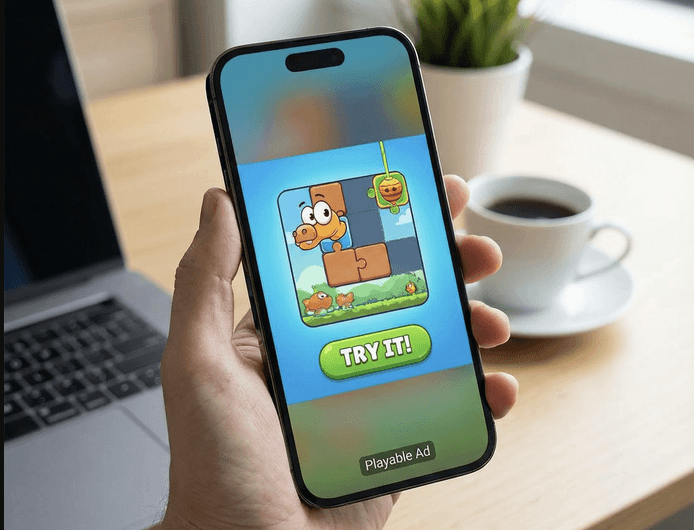
Playable ads have been seeing massive success over the past couple of years, ever since Bagelcode saw a 3.2X improvement in return on ad spend in 2018.
In 2026 playables sit firmly in the core UA toolkit for mobile games, not because they are flashy, but because they help teams acquire users who actually stick around. That said, they are also one of the most misunderstood formats in mobile advertising. When they work, they work very well. When they fail, they fail expensively.
This article breaks down how playable ads really perform today, what best practices still matter in 2026, and the most common mistakes we continue to see across publishers and studios.
What Are Playable Ads?
Playable ads are interactive ad units (not to be confused with fake ads) that let users experience a simplified version of a game before installing it. Instead of watching gameplay, users actively interact with it.
Most playable ads run between 15 and 45 seconds and are usually built as HTML-based playables that simulate gameplay or as interactive video hybrids that add touch inputs to recorded footage.
What has changed in 2026 is not the format itself, but how it is used.
Playable ads are no longer just about engagement. They are about qualification. They help filter users before install by showing them exactly what kind of experience they are opting into.
Why do Playables work so well?
Playables are all about engagement; they work so well because players engage with them as if already in the game.
Furthermore, playable ads don’t feel like ads, which is one of the main reasons for their effectiveness. If done well, they set the player's expectations for the game, which can positively influence LTV and game retention.
The best examples leave players wanting more, which increases the tendency to download a game.
Check out our interview with Santiago Cordoba of Adsmood on what's next for Playables.
Why Playable Ads Still Matter
Playable ads consistently deliver stronger downstream performance compared to standard video ads, especially for retention and lifetime value.
According to data shared by ironSource, playable ads can improve retention rates by 30 to 40 percent compared to non-interactive formats. That difference alone explains why many teams accept a higher CPI when running playables.
Users who install after interacting with a playable ad already understand the core mechanics. There is less surprise, less frustration, and less early churn.
An important point for studios to note is that playable ads do not necessarily bring cheaper users but they are more likely to bring better-informed users.
Playable Ads by Game Type
Casual and Hyper Casual Games
Playable ads remain a natural fit for casual and hyper casual games. Simple mechanics, fast feedback, and short sessions translate well into interactive ads.
The best-performing playables in this category usually focus on early-game mechanics, clear success conditions, and quick wins. The goal is to let users feel smart and successful within seconds.
Mid Core Games
Playable ads can work for mid-core games, but only when complexity is stripped down aggressively.
Trying to recreate the full game experience almost always fails. Instead, successful teams isolate a single mechanic or fantasy and build the playable around that.
In some cases, mid-core games even use puzzle-style playables that do not exist in the actual game. This can still work as long as the emotional promise of the ad matches what players will experience after installing.
The Core Elements of a High-Performing Playable
Every strong playable ad is built around the same basic structure.
Onboarding must be instant. Users should understand what to do within two or three seconds. If instructions are long or text heavy, the playable is already too complex.
Gameplay should feel guided but not restrictive. The playable should subtly lead users toward success while still allowing interaction. The goal is momentum, not mastery.
The call to action should always be visible. In 2026, waiting until the end of the playable to show an install button is a missed opportunity. Users should be able to install the moment they feel convinced.
Playable Ads Best Practices for 2026
Put a logo on it
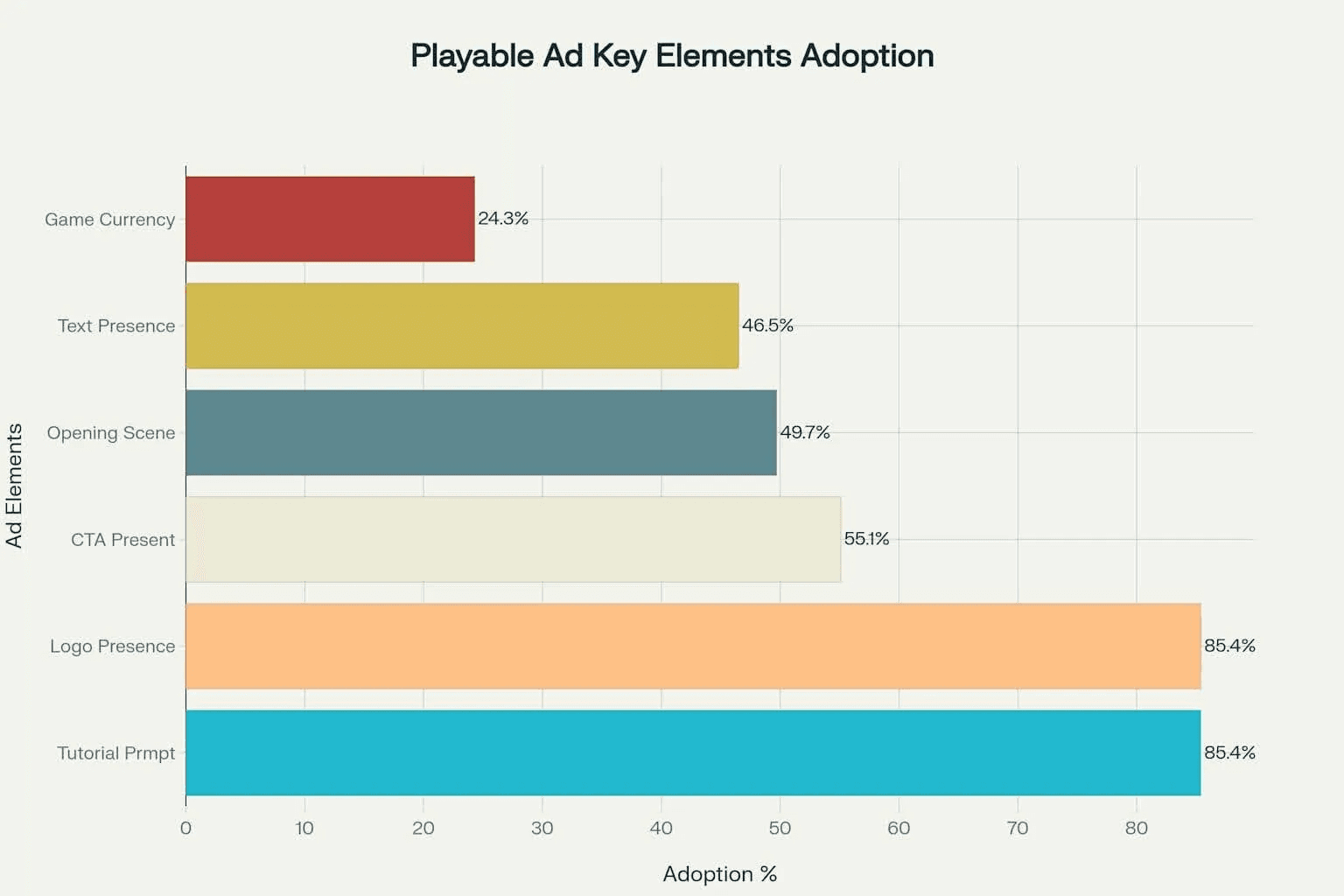
Source: Apptica – Adoption Rates By Key Elements in Playables
Adoption rates by key elements in playable ads show that tutorial prompts and logos are some of the most common features for success.
CTAs matter
A well-placed “Try Now” or “Download” still makes a difference and are found in the 55.1% of top playables.
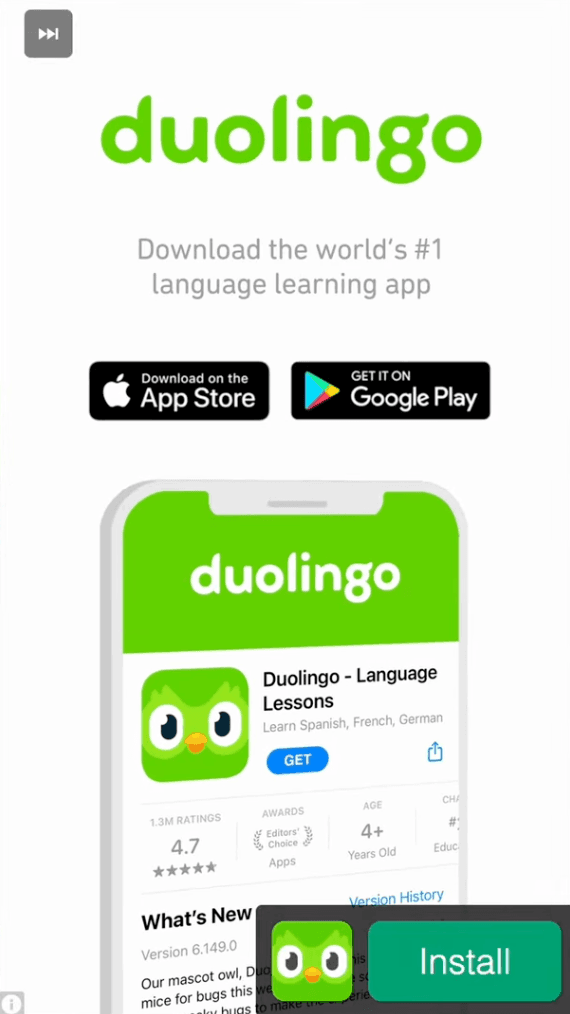
Check out how Duolingo is winning this game Source: Apptica – Playable Ad Examples
One of the most important best practices is designing for the first win.
Let users succeed based on hands on user acquisition work and repeated playable ad testing across different game genres, a few patterns consistently show up in 2026.
Playable ads perform best when users are guided toward an early success.
In practice, letting players “win” inside the ad leads to higher completion rates and stronger install intent. Playables that rely on early failure can work, but only when difficulty is tuned very carefully. When users feel confused or blocked before understanding the core mechanic, drop off tends to increase quickly.
Each playable should be built around a single idea.
Teams see clearer results when one playable tests one mechanic, one fantasy, or one player motivation. When multiple ideas are combined into the same interactive ad, it becomes difficult to understand what actually drove performance, which slows down learning and optimisation.
Variation also matters, but only when it is intentional.
In real campaigns, changing surface level elements such as colors or minor UI details rarely produces meaningful performance shifts on their own. More impactful tests usually involve differences in pacing, win versus lose outcomes, reward visibility, or the level of pressure introduced during gameplay. These changes directly affect how users feel while interacting with the ad.
Playable ads tend to scale differently than video ads, and this is something teams need to plan for.
While a strong video concept can often support dozens of variations, playable ads usually produce a smaller number of clear winners. In many cases, three to five high performing playables are enough to drive consistent results. This is normal for the format and should be reflected in production and testing expectations.
The Most Common Playable Ads Mistakes
This is where most budgets are lost.
Mistake #1: Recreating the Full Game
Playable ads are not demos and trying to replicate the full experience leads to:
confusion
slow onboarding
poor conversion
One of the biggest mistakes is trying to recreate the full game inside the ad. Playable ads are not demos. Overloading them with systems, menus, or advanced mechanics only increases confusion and drop off.
Mistake #2: Over-Optimizing for CPI
Playable ads often bring:
higher CPI
higher retention
stronger payer rate
Playables often come with higher CPIs, but stronger retention and payer quality. Killing them too early based on top-of-funnel metrics alone is a costly error.
Mistake #3: Treating Playables as Plug-and-Play
Playable ads are not:
“upload and forget”
a guaranteed winner
a replacement for strategy
They require hypothesis and iteration.
Mistake #4: Producing Internally Without Expertise
Teams underestimate:
UX decisions
difficulty tuning
event instrumentation
Finally, some publishers try to produce playables entirely in house without prior experience. Playables look simple on the surface, but small UX decisions, difficulty curves, and event tracking details make a huge difference. Poor execution often leads to false negatives.
Playable ads look simple which they are not. Rather have your playables done by a create team who knows what they're doing.
Final Thoughts on Playable Ads in 2026
Playable ads are highly effective, but they are also not a shortcut to success.
They work best when teams understand their audience, simplify aggressively, measure beyond CPI, and treat creative as a strategic lever rather than a production task.
When used correctly, playable ads do more than drive installs. They help you acquire users who know what they are getting and choose to stay.
Related Articles


