Understanding the types of mobile games is foundational to building a UA strategy that works. The genre of your game determines CPI benchmarks, retention expectations, monetization model, and how much budget you need before soft launch data becomes actionable.
Strategy games generated 21.4% of total mobile game revenue in 2025 despite representing only 4% of downloads (Sensor Tower via Udonis, 2026) and shows clearly how much genre shapes the commercial profile of a game.
This guide breaks down the main mobile game types from a marketing and growth perspective, covering what each genre means for your UA setup, CPI range, and creative strategy.
Key Takeaways
Mobile game genre determines CPI range, optimization event timeline, and which retention benchmarks apply to your game.
Strategy games generated 21.4% of total mobile game revenue in 2025 despite representing only 4% of downloads. (Sensor Tower via Udonis, 2026) Downloads and revenue tell completely different stories depending on genre.
Hyper-casual and casual puzzle each have distinct UA profiles: hyper-casual is a CPI and creative velocity exercise; casual puzzle justifies a higher CPI ceiling because LTV supports it.
Creative strategy should be built around what the genre's player expects. Genre-matched creatives consistently outperform generic ones regardless of targeting quality.
What are the main types of mobile games?
There are more than 25 types of mobile games, you can head over to Udonis and check each of them out.
Today we're looking at the main types of games.
Mobile game genres are classified by their core gameplay loop, not by setting or theme.
A medieval game where the main mechanic is matching gems is a puzzle game.
A sci-fi game where players deploy troops in real time is a strategy game.
The setting is simply decoration. The mechanics determine how players will behave, how long they will stay, and what they will pay for.
Genre | Primary monetisation | Typical UA optimisation event | D1 retention target |
|---|---|---|---|
Hyper-casual | In-app advertising | Install / D1 session | 35–40% |
Casual puzzle | IAP + advertising | Level complete / first purchase | 38–45% |
Mid-core RPG/strategy | IAP (deep funnel) | Guild join / first battle / first purchase | 35–42% |
Battle royale/shooter | IAP + cosmetics | Match complete / first ranked game | 30–38% |
Simulation/lifestyle | IAP + subscription | First build / first social action | 30–35% |
Idle/incremental | IAP + advertising | First offline reward / first upgrade | 28–35% |
Hyper-casual
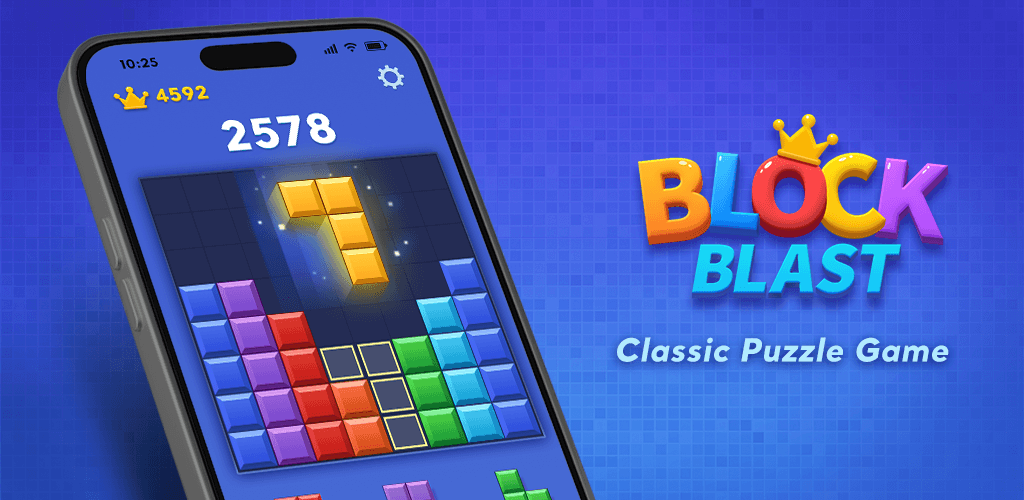
Hyper casual games are simple, no-tutorial, ad-supported games with a single-mechanic core loop. These games often have bright colours, sounds and simple goals so anyone can enjoy them.
Hypercasual games saw 16.5 billion downloads in 2025, making up 28% of total downloads; the highest of any genre. (SQ Magazine, 2026)
Examples:
Block Blast!,
Subway Surfers,
Flappy Bird clones.
Best use for studios
Rapid concept validation. Low development cost, fast test cycles. Viable for small teams with strong creative instincts.
UA best practice for hyper casual games
The economics of hyper casual games only work at volume. Under-budgeted campaigns will not generate reliable CPI data. Do not extrapolate from fewer than 5,000 installs per channel.
Casual puzzle
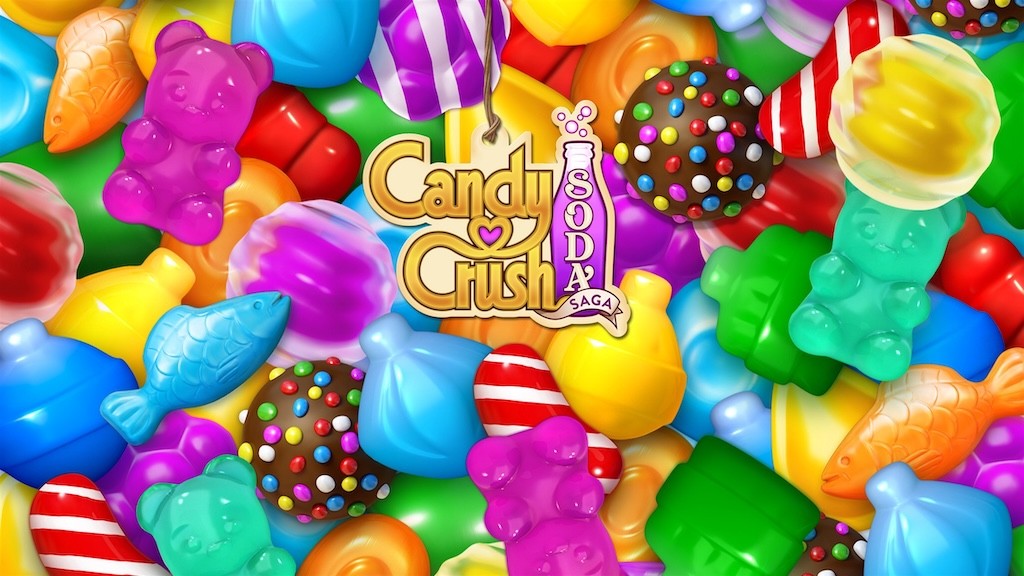
Match-3, merge, sort, and block puzzle games monetised through a blend of IAP and advertising.
Puzzle revenue grew from $7.7 billion to $8.8 billion (+14.7% YoY) in 2025. (AppMagic Monetization Report 2025)
Examples include:
Royal Match,
Candy Crush Saga,
Toon Blast,
Gossip Harbor.
Best use for studios
Casual puzzle games are only viable at mid-size studio scale if creative differentiation exists. Match-3 is heavily consolidated so Merge-2 and Sort Puzzle offer lower entry barriers.
Creative strategy should surface the core mechanic in the first three seconds.
UA best practice for casual puzzle games
This is a high revenue concentration: only 4 out of 367 newly launched Match-3 titles in 2025 surpassed $100K in monthly revenue even once.
New entrants need a genuine sub-genre angle or differentiated mechanic.
Avoid mimicking Playrix's fake-ad approach without the budget to test and iterate at their velocity.
Mid-core: strategy, RPG, MOBA, 4X
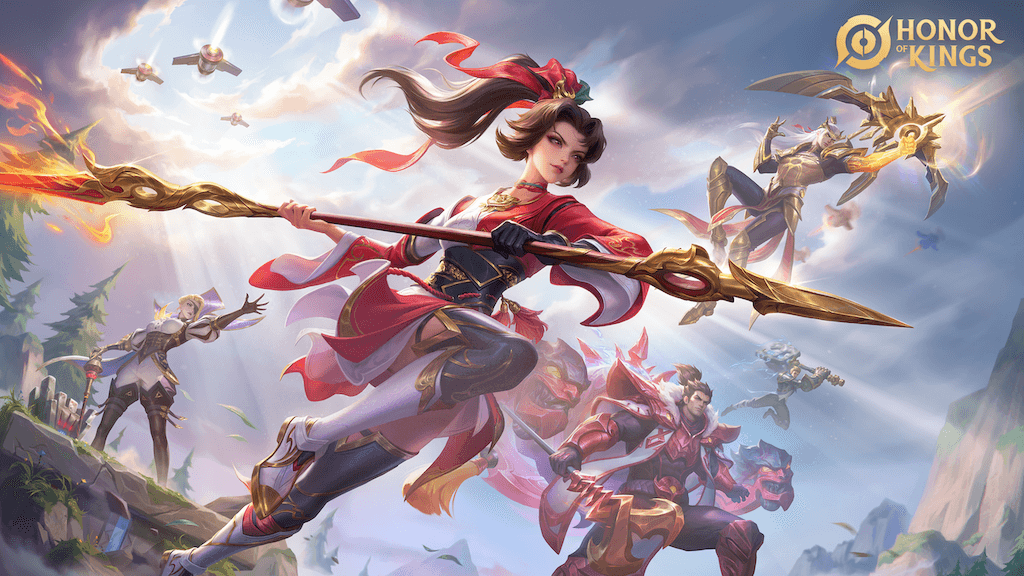
Mid-core games have more depth than casual titles but are designed for mobile play, so sessions run 10 to 15 minutes rather than hours. Players build armies, level up characters, manage resources, or compete in ranked matches. There are systems to learn and decisions that matter.
Players who get into these games tend to stay for months, and the ones who spend can spend significantly.
Mid-core games generated $33 to $34 billion in IAP revenue in 2025. (AppMagic Mobile Market Landscape 2026)
Examples
Honor of Kings
Last War: Survival
Whiteout Survival
Rise of Kingdoms
Best use for studios
High revenue ceiling for studios that can sustain the development and LiveOps investment over time.
The strategy subgenre grew 16% in 2025, and titles like Last War and Whiteout Survival show that simplified 4X mechanics can reach a much broader audience than traditional mid-core.
UA best practice for mid-core games
Campaigns cannot optimize for installs alone. Define meaningful in-game milestones (first guild join, first battle, first purchase) and pass them as optimization events to ad networks.
ARPPU on the App Store is 4–8x higher than on Google Play in strategy games, but UA costs on iOS are also higher. Budget planning must account for platform-level LTV differences, not just blended ROAS.
Battle royale and shooter
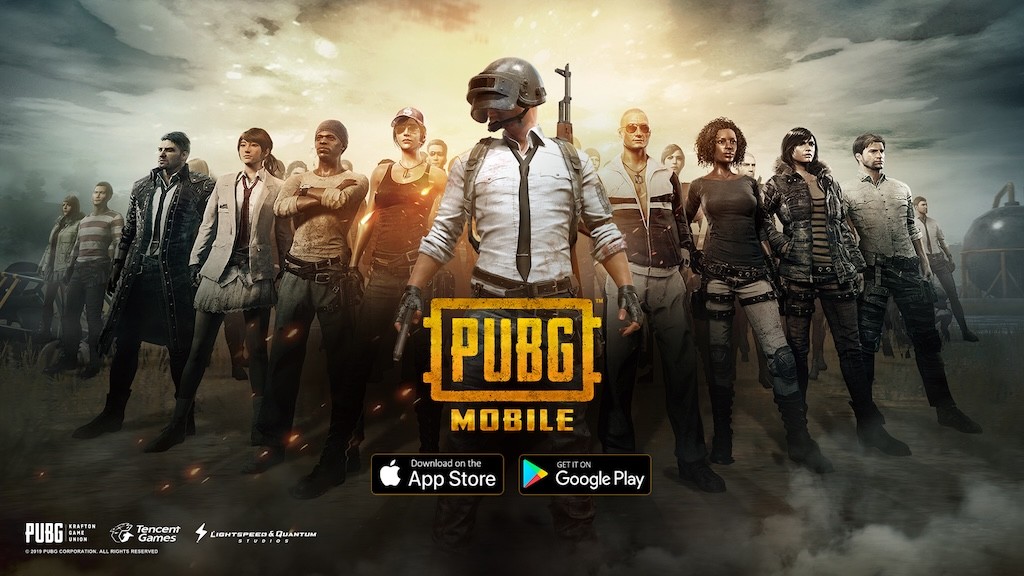
Battle royale and shooter games are competitive multiplayer titles where players fight against each other, with the last player or team standing winning the match. On mobile, a full match typically runs 15 to 20 minutes.
The appeal is the competitive rush, the social side of playing with friends, and the fact that no two matches play out the same way.
Four out of ten most downloaded mid-core games in 2025 were in the Shooter/Action category. (MAF Top Mobile Games 2025)
Examples
PUBG Mobile
Free Fire
Call of Duty Mobile
Best use for studios
High production cost and an intensely competitive UA environment make this genre difficult for most independent studios to compete in broadly. Sub-genre experimentation such as extraction shooters and squad survival games may offer more realistic entry points.
UA best practice
Social and competitive-framing creatives outperform graphics-led or solo-play concepts.
Ranked progression and squad-based mechanics should be front and centre in ad creative.
Genre benchmarks are heavily influenced by dominant titles with massive organic install bases. Do not benchmark your CPI or retention against PUBG's numbers.
Simulation and lifestyle games
Simulation and lifestyle games let players build, manage, or create at their own pace. You might run a farm, manage a city, design a home, or play through a story. There is rarely a way to lose. Players check in when they want, tend their world, and watch it grow over time. These games attract people who would not normally call themselves gamers, because the appeal is personal and low-pressure.
Simulation was the second most downloaded genre in 2025, capturing 20% of total downloads. (Udonis Mobile Gaming Statistics 2026)
Examples
Hay Day
The Sims Mobile
Episode
Stardew Valley Mobile
Best use for studios
Broad demographic reach, particularly strong with female audiences.
The genre monetises well through subscriptions and idle progression mechanics. Competitive intensity is lower than puzzle or mid-core in most sub-genres, giving smaller studios a more realistic path to visibility.
UA best practice for situational and lifestyle games
Creative strategy should lean into the aspirational fantasy of the game, not the mechanics.
The 'dream of the outcome' (a beautiful farm, a thriving city) converts better than feature demonstrations.
Subscription-based monetisation is becoming standard so build it in early and factor it into LTV projections.
Session expectations in simulation are flexible. Players tend to dip in and out rather than play long continuous sessions, which means daily session counts can understate actual engagement.
Measure stickiness by weekly active users for a more accurate picture.
Idle and incremental Games
Idle games progress while you are not playing. You set things in motion, close the app, and come back later to collect what has built up. There is always a reward waiting when you return, which makes the habit of opening the app easy to form. These games suit players who want progress without pressure and work particularly well for audiences with limited time.
The idle and incremental model is one of the fastest-growing formats in hybrid-casual gaming in 2025. (AppMagic Mobile Market Landscape 2026)
Examples
AFK Arena
Idle Heroes
Merge Mansion
Best use for studios
Low session commitment makes idle games appealing to older and time-constrained audiences. IAP conversion is driven by acceleration mechanics, where players pay to speed up progress they know is happening regardless. Strong D30 potential is achievable when offline reward loops are well designed.
UA best practice for idle and incremental games
The 'progress while you sleep' hook is the most consistent creative angle.
Test video creatives showing the offline reward arrival; the dopamine loop of returning to accumulated resources is highly demonstrable in 15 seconds.
Optimise for D7 session return events rather than install.
High D1 retention driven by the offline hook often masks a sharp D14 drop when players exhaust early progression.
The UA brief should flag the mid-game content cliff as a product risk.
What does game type mean for UA strategy and CPI expectations?
Downloads and revenue are not the same metric.
A hyper-casual game might generate 20 million installs and thin margins.
A mid-core RPG might generate 500,000 installs and significantly higher LTV per player.
Before running a campaign, the genre tells a UA team: what CPI range is realistic, how long the learning phase will take, what optimization event makes sense, and what D1 and D7 benchmarks should be considered healthy.
What do retention benchmarks look like across game types?
According to GameAnalytics 2025 Mobile Gaming Benchmarks, median D1 retention across all games sits around 22%, with top 25% of games reaching 31–33% on iOS.
The top genres for medium and long-term retention are board, card, puzzle, and casino games.
Genre | D1 target | D7 target | D30 target |
|---|---|---|---|
Match/puzzle | 32–45% | 14–18% | 5–8% |
Tabletop/card | 31–38% | 13–17% | 5–6% |
RPG/mid-core | 30–42% | 15–22% | 5–12% |
Simulation | 30–35% | 12–16% | 4–7% |
Hyper-casual | 28–35% | 10–14% | 3–5% |
Shooter/battle royale | 28–34% | 12–16% | 4–7% |
Idle/incremental | 30–38% | 11–15% | 4–7% |
Best Practice for UA Teams: Game Type Checklist for UA Planning
✔ CPI expectations are benchmarked against the correct genre, not all-game averages
✔ Optimization event is mapped to a meaningful in-game milestone for the genre (not just install)
✔ Learning phase budget per channel is set based on game genre CPI, not a flat figure
✔ Creative brief references genre-specific player psychology (competitive, aspirational, completionist)
✔ Retention benchmarks used are genre-specific
✔ LiveOps calendar is planned before UA spend begins
It's important to understand game type in order to know;
Which UA Channels to use
How to monetize the game
And ultimately how to market the game appropriately
Hubapps is a specialist mobile gaming consultancy working as an embedded fractional team for studios and marketing teams. If you'd like to find out how to take your game to the next level, let's talk

Mobile gaming UA specialist since 2011. A female pioneer in the industry, Maria has scaled games across every major platform and genre, from indie puzzle games to massive strategy titles. Known for straight talk and results that actually matter.
Share
Related Articles