Table of Contents
1. What Is Mobile Game Marketing?
2. Why Mobile Game Marketing Matters More Than Ever
3. Core Elements of Mobile Game Marketing
4. Mobile Game Marketing Strategies That Work
5. Marketing Channels: A Comparative Overview
6. Mobile Game Marketing Success Stories
7. Key Metrics & KPIs Every Game Marketer Must Track
8. Key Takeaways
9. FAQs
Most studios that come to us have already tried to figure out mobile game marketing on their own. They have put some money into Meta campaigns, maybe hired a freelancer or briefed an agency, and spent more than they planned, and are still not sure if it actually worked.
That gap between spend and certainty is exactly why we built Hubapps: to help apps and studios scale.
This guide is written for studio founders and marketing leads who are making real decisions about how to market their game.
Here is the framework we use with the mid-size studios we work with; the ones that have a live title, a UA budget, and the pressure to make it perform.
If you are at that stage, read on.
Note: Where industry data is cited, figures are drawn from the Adjust Gaming App Insights Report 2026 unless otherwise stated.
Key Takeaways
Mobile game marketing in 2026 is a precision discipline. Here are the principles that consistently separate the studios getting it right from those burning budget without results:
Your store listing is a marketing channel (not an admin task). ASO directly improves the conversion rate of every paid channel running alongside it; a weak listing costs you money on every campaign simultaneously.
ASO is the highest-ROI investment most studios are underutilizing. A well-optimized store listing improves the conversion rate of every paid channel simultaneously, reducing your effective CPI across the board.
Creative is now the primary audience-targeting mechanism. With signal loss from privacy frameworks limiting deterministic targeting, the ad itself does the filtering. Studios that treat creative testing as a core competency win; those that treat it as a production task lose.
Retention is not a product problem separate from marketing; it is a joint responsibility. An ad that misrepresents gameplay acquires players who churn. Alignment between what marketing promises and what the product delivers is the most underrated driver of long-term efficiency.
Fewer, better-optimized channels outperform a broad network scatter. Mastering two or three channels fully, understanding their creative requirements, bidding mechanics, and optimization levers, consistently delivers better results than running ten channels with shallow investment in each.
Live ops and re-engagement are not post-launch afterthoughts. Build your live ops calendar and retargeting infrastructure before launch. An exciting in-game event without a re-engagement campaign to amplify it is a missed opportunity; a re-engagement campaign without an event to reference lacks urgency.
Measurement infrastructure is not a cost center; it is a growth enabler. Studios with clean MMP integration, reliable attribution, and connected acquisition-to-monetization data make better decisions faster. Those without it are guessing with expensive money.
The best marketing lessons come from games that have already solved the problem. The success stories in this guide, Candy Crush, Royal Match, Clash Royale etc, each found a different path to scale. Understanding which path fits your game and genre is more useful than copying the one that made the most headlines.
What Is Mobile Game Marketing?
Mobile game marketing is the full-funnel practice of attracting, converting, and retaining the right players for your game, at a cost that makes long-term growth sustainable.
It is not a single tactic. It is a connected system of paid media, organic discovery, creative development, product optimization, and data-driven measurement, all pulling in the same direction.
In practical terms, it means getting your game in front of people who will genuinely enjoy it, install it, come back for more, and spend money inside it.
What it is not: buying installs in bulk and hoping for the best.
Studios that mistake volume for value end up hemorrhaging budget on players who churn within 24 hours, a real problem given that the average global day-one retention rate across all gaming genres sits at just 27%.
Mobile game marketing spans two distinct phases, and discipline in both is what separates games that endure from those that flame out after launch week:
Pre-launch: market research, genre competitive analysis, soft launch in test markets, App Store Optimization (ASO), influencer seeding, community building, and creative testing.
Post-launch: paid user acquisition (UA), retargeting lapsed players, live operations marketing, cross-promotion, and continuous creative iteration.
It is also worth being clear about who does this work. Mobile game marketing is handled either by in-house growth and UA teams, agencies, or by embedded specialists who operate as part of a studio's own team.
Here at Hubapps, we work as the latter: an embedded growth partner, not a traditional agency. It's a distinction that matters because it changes how strategy gets made, how close the feedback loop is between marketing and product, and how accountable the team is to your specific LTV targets.
Why Mobile Game Marketing Matters More Than Ever
Mobile Game Marketing: Why Most Games Fail & How to Win | Peter Fodor
Mobile now accounts for more than half of global gaming revenue, and there are nearly 3 billion mobile gamers worldwide 🤯.
Those numbers sound like an opportunity, and they are but they also mean competition has never been fiercer. There are more than five million apps across the App Store and Google Play. Simply building a good game and expecting players to find it is not a strategy.
Three structural realities make marketing not just important but existential for most studios today:
Acquisition costs are rising significantly
User acquisition costs have climbed sharply across all regions and formats. According to Adjust's 2026 Gaming App Insights Report, the global average cost per install (CPI) rose 30% year-on-year.
North American studios are now paying an average of $1.68 per install.
Europe sits at $0.53.
At the same time, the ratio of paid installs to organic installs has surged, meaning developers are having to spend more just to maintain the same growth rate they achieved organically before.
The implication is that the cost of acquiring a bad player, one who churns within a day, is now high enough to be damaging. Precision matters in a way it simply did not when installs were cheap.
Organic discovery is getting harder
The paid-to-organic install ratio is climbing sharply is not just a cost problem; it signals that the app stores' organic discovery mechanisms are delivering proportionally less for most titles. ASO still works, but it is working harder for fewer gains.
Word-of-mouth still exists, but it has to be engineered through community building, influencer marketing, and viral mechanics baked into the product. Studios that treat organic as a background process are losing ground to those that treat it as an active, ongoing strategy.
Players have higher expectations and shorter patience
The average player will give a new game less than a day before deciding whether to return. As Bain & Company noted in their gaming industry analysis, successful mobile studios are highly effective marketing machines, but the studios that struggle are those that fail to align their marketing and product teams, resulting in confused targeting and wasted spend.
Acquiring a player who bounces because the game fails to deliver on the promise of its advertising is arguably worse than not acquiring them at all: it costs money and pollutes retention data.
The interaction between UA and product quality is also where the top mobile games separate themselves from the rest. The best-marketed games are almost always also the best-designed games, because marketing can only amplify what is already there.
Core Elements of Mobile Game Marketing
Think of mobile game marketing as a machine with interlocking parts. Weakness in any one area creates drag across the whole system. The following are the non-negotiable components of a functional mobile game marketing operation.
App Store Optimization (ASO)
ASO is the organic foundation of your marketing. Your store listing is a landing page that runs 24 hours a day, and every element of it, title, subtitle, description, icon, screenshots, preview video, and ratings, influences both your search visibility and your conversion rate. Weak ASO means you are paying more for every install, because your paid traffic converts at a lower rate when it lands on an under-optimized listing.
Title and keywords: Research the terms your target players actually search. Tools like AppTweak, Sensor Tower, and MobileAction surface high-volume, low-competition keywords specific to your genre.
Screenshots and preview video: These are conversion assets, not decoration. The first two screenshots must communicate your core loop before a user taps 'more.' A well-produced preview video can lift conversion by 10–20% on its own.
Ratings and reviews: Sub-4-star ratings measurably reduce install conversion. Prompt satisfied players for reviews at positive session moments, not after a loss screen.
Continuous iteration: ASO is not a one-time task. Monitor keyword rankings, test new screenshots with store listing experiments, and update assets around major content releases.
Paid User Acquisition (UA)
Paid UA is the primary growth lever for most studios once the organic foundation is in place. It encompasses everything from Meta and Google campaigns to programmatic DSPs and ad network partnerships. The core discipline is selecting channels that deliver players with genuine long-term value, not just installs.
The full breakdown of how to structure, scale, and optimize paid UA campaigns, including soft launch frameworks, bidding strategy, and retargeting, is covered in our dedicated guide on optimizing UA campaigns.
Creative Development and Testing
In a world where audience-targeting signals are increasingly constrained by privacy frameworks, creative has become the primary mechanism for audience selection. The right ad self-selects the right user: someone who sees gameplay and installs because they genuinely want to play, not because an algorithm targeted them at random.
Want to develop and optimize your creative? Check out our creative strategy services.
Attribution and Measurement
Attribution is the infrastructure that maps each install back to its source: the specific ad, creative, network, and campaign that drove it. Without it, you cannot distinguish profitable channels from money pits.
Mobile Measurement Partners (MMPs) like those including Adjust, AppsFlyer, Singular, and Kochava, consolidate data from dozens of ad networks into a single source of truth. They sit at the center of every serious gaming marketing stack and enable fast, confident decisions on budget allocation, creative rotation, and partner management.
Apple's App Tracking Transparency (ATT) framework has meaningfully limited deterministic attribution on iOS, making MMP selection and probabilistic modeling more important than ever. Global gaming ATT opt-in rates reached 39% in Q1 2026, meaning the majority of iOS users are still not sharing device-level data. Understanding this gap is essential for setting realistic reporting expectations.
Retention and Re-engagement
Acquisition without retention is a leaking bucket. Re-engagement campaigns target users who have installed but stopped playing, an enormous audience.
According to GameAnalytics' analysis of over 10,000 games, the median day-one retention rate sits at around 23%, meaning roughly three in four players don't return after their first session. Keeping existing players is almost always cheaper than acquiring new ones, which makes ad formats and promises highly important.
While formats like fake ads are likely to result in a high CPI, they can be prone to high churn, whereas players acquired through in-game advertising are more likely to attract players who are more likely to stick.
For this reason, marketers and studios need to consider actions not strictly tied to marketing but that will have an impact on retention. Things like;
Push notifications: Most effective when tied to in-game events or personalized to a player's specific session history rather than generic 'come back' messaging.
Email and CRM: For games with registered accounts, email provides a direct, algorithm-free channel. Segmentation by engagement level and monetization tier makes it meaningfully more effective.
Live Operations (Live Ops): Time-limited events, seasonal content, and dynamic offers sustain session frequency and player lifetime value long after launch. They also provide a concrete rationale for re-engagement campaigns.
Influencer and Community Marketing
Paid channels can get your game in front of a large audience quickly, but they cannot manufacture trust. Influencer and community marketing fills that gap, reaching players through voices they already follow and believe in, in spaces where they are actively engaged with gaming content.
The two are connected but distinct. Influencer marketing is about reach and credibility at the point of discovery; community building is about sustaining a relationship with players over the long term. Both contribute to organic growth, and both reduce your dependence on paid spend for every new install.
Macro influencers (1M+ followers): Broad awareness reach, useful for major launches. Difficult to attribute precisely, treat as brand spend, not performance spend, and plan creative accordingly.
Mid-tier creators (100K–1M): Often deliver better cost-per-acquisition than macro influencers while maintaining genuine audience relationships. A strong middle-ground for most studios, particularly when a genre-specific creator can be found.
Micro and nano creators (under 100K): Highly niche, genre-specific audiences. A mid-core RPG partnering with dedicated RPG YouTube channels will reach players more qualified than almost any paid channel.
Discord and community infrastructure: Building a server around your game creates a direct feedback loop, generates organic advocacy, and produces player-generated content that doubles as marketing material, at near-zero marginal cost once the community is active.
Mobile Game Marketing Strategies That ACTUALLY Work
The following are the approaches that evidence and practice consistently validate.

Watch: How to promote your game: Insights from Google
Precision UA: Know Your Player's Value Before You Scale
The era of broad, high-volume UA is over for most genres. Rising acquisition costs have made a surgical approach the only economically sustainable one. This means defining your predicted LTV (pLTV) model before scaling spend, knowing what a Day-30 retained player is worth in monetization terms, and working backwards to a maximum acceptable CPI.
It also means being selective about channels. Studios that spread budget thinly across a large number of networks are rarely outperforming those that master two or three channels deeply. Consolidation is the correct response to the data showing that most installs come from a small number of consistently high-performing sources.
Incrementality testing, running holdout experiments to isolate the true causal impact of each channel, is increasingly essential for separating genuine contribution from the attribution credit that ad networks naturally claim for themselves.
Creative-Led Growth: The Ad is the Audience Filter
When targeting signals are restricted, creative does the filtering work instead.
A well-crafted playable ad or gameplay video self-selects players who are genuinely interested in what your game offers. This is why creative testing volume has become a competitive differentiator: the studios producing and testing the most creative variations are finding their ideal player more efficiently than those running a small rotation of approved assets.
The practical minimum is three to five new creative concepts per week in an active UA phase, with clear hypotheses for each and a fast decision process for retiring underperformers. Localization is part of this, adapting creative for specific markets, not just translating text but rethinking the hook entirely for different cultural contexts.
Live Ops as a Marketing Engine
Live operations, time-limited events, seasonal content, and collaborative challenges have graduated from game features to marketing strategies. They provide a recurring reason for re-engagement campaigns to have genuine urgency ('the event ends Sunday'), and they sustain session frequency for retained players without requiring additional acquisition spend.
Studios with the strongest long-term performance build their live ops calendar into launch planning, not as an afterthought once the game is live. Coordinate live ops events with retargeting campaigns: an exciting in-game event gives lapsed-player ads a specific, compelling reason to return rather than a generic call to action.
Cross-Platform and D2C Expansion
Larger publishers are increasingly building direct-to-consumer (D2C) web stores, external purchase channels that bypass app store commission structures and offer players better value while improving studio margins. This strategy requires investment in web infrastructure and CRM but can meaningfully improve unit economics for titles with an established player base.
Cross-platform strategies, extending mobile IP to PC and console, or vice versa, serve both marketing and retention functions. A PC launch creates a marketing moment that can re-engage the mobile player base. Unified cross-platform measurement is the infrastructure requirement that makes this tractable.
The Soft Launch as Marketing Infrastructure
Soft launch is not just product testing; it is marketing infrastructure. Running in a limited test market before global launch validates core retention metrics (D1, D7, D30), generates the event data that ad network algorithms need to optimize towards, and identifies the creative angles and audience segments that actually convert, before you commit budget at scale.
Clear gates matter: a D1 retention rate below 30%, a D7 rate below 10%, or no visible monetization signal in the first 1,000 installs are indicators that a global launch will amplify a problem rather than solve it.
Marketing Channels: A Comparative Overview
Not every channel suits every game. Additionally, in general, today’s UA teams run far fewer campaigns with much larger budgets. It makes sense to optimize the channel that works best rather than dilute spend.
The table below gives a practical comparison of the major mobile game marketing channels, their strengths, best-fit genres, typical cost structure, and the key trade-offs to understand before investing.
Channel | Best For | Cost Model | Strengths | Watch Out For |
|---|---|---|---|---|
Meta Ads (Facebook / Instagram / Reels) | Casual, puzzle, social games | CPM / CPI / ROAS bidding | Massive scale; strong creative testing tooling; sophisticated ROAS optimization | Requires significant event volume before ROAS bidding stabilises; iOS signal loss |
Google UAC | Broad demographic reach; casual to mid-core | Target CPA / ROAS | Covers Search, Play Store, YouTube and Display in one campaign | Creative control is limited; black-box optimization; need varied asset formats |
TikTok Ads | Hyper-casual, casual; 18–34 demographics | CPM / CPI | Native-style creative performs exceptionally; strong virality potential; younger audience | Requires UGC-style creative investment; audience skews younger |
AppLovin / ironSource | Mid-core, hyper-casual; Android-heavy | CPI / ROAS | Deep gaming network inventory; strong in-app bidding ecosystem | Less useful outside core gaming inventory; creative fatigue can set in quickly |
Programmatic DSPs (e.g. Moloco, DV360) | Mid-core, strategy, RPG; high-LTV targeting | CPM / dCPM | Granular audience targeting; machine-learning bidding; less competitive inventory | Higher technical complexity; needs strong MMP integration to work well |
Apple Search Ads | iOS user acquisition; all genres | CPT / CPA | Intent-based; highest quality iOS users; minimal creative complexity required | Limited scale compared to social; expensive in competitive categories |
Influencer / Creator Marketing | Launch awareness; community building; niche genres | Flat fee / CPI / rev share | High trust; genre-specific targeting; generates reusable content assets | Attribution is difficult; results vary widely by creator and briefing quality |
ASO (Organic Search) | All genres; especially those with strong keywords | Time investment | Free installs; permanent listing improvement; lifts paid channel conversion too | Takes time to compound; requires ongoing keyword and asset iteration |
Community (Discord / Reddit / Social) | Mid-core, RPG, strategy; long-LTV games | Time and community management resource | Generates organic advocacy, UGC, and direct feedback loops | Slow to build; requires genuine responsiveness and content investment |
Email / CRM | Re-engagement; games with account registration | Platform cost only | Direct channel; highly segmentable; strong for lapsed user reactivation | Only works if players registered; deliverability requires ongoing management |
A note on channel strategy: the most common mistake is spreading budget across too many channels at once. Starting with two or three channels and mastering them fully, understanding their creative requirements, bidding mechanics, and optimization levers, consistently outperforms a broad, shallow approach. Add new channels only once existing ones are fully optimized.
For a detailed operational framework on how to structure and scale across these channels, see our guide on optimizing UA campaigns.
Mobile Game Marketing Success Stories
The following case studies are chosen for the clarity of the marketing lesson they offer; each illustrates a distinct strategy that studios of any size can learn from and adapt.
For a broader look at the games currently dominating download and revenue charts, see our full analysis of the top mobile games but here are are five of our favorite success stories
Candy Crush Saga, Engineering Virality Before Virality Was a Strategy
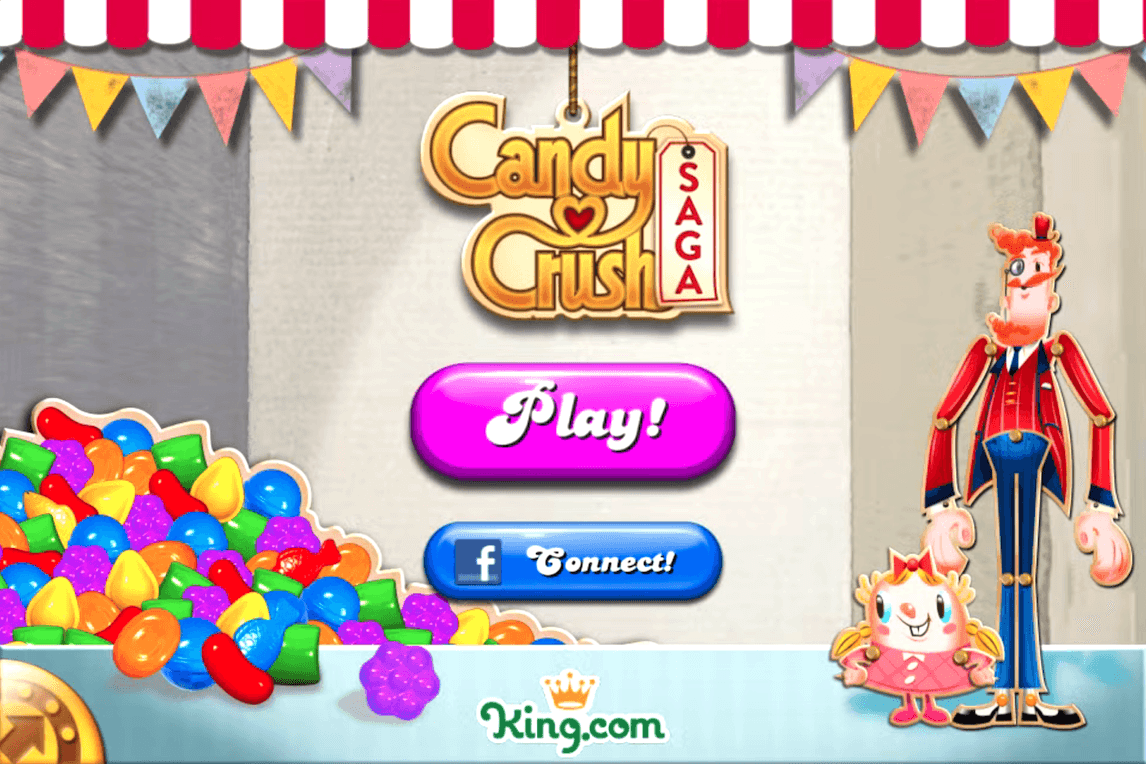
King's Candy Crush Saga has generated over $20 billion in lifetime revenue and earned more than $1.24 billion in 2024 alone, remarkable for a game that launched in 2012.
The marketing story behind it is less about advertising and more about architecture. King built virality directly into the product: players needed to ask Facebook friends for lives, which turned every stuck player into a notification in someone else's feed. The game spread through social graphs before social media marketing was an established discipline.
The lesson for modern studios is that the most powerful marketing mechanic is often a product decision, not a media buy.
Referral loops, social sharing moments, and competitive features that only work with friends are UA channels that cost nothing per install once they are live. Candy Crush also pioneered the 'freemium friction' model, limiting progression to encourage in-app purchases without blocking casual players entirely, which became the template for an entire generation of mobile games.
Royal Match, Creative Testing as a Core Competency
Dream Games' Royal Match has been among the highest-grossing mobile games in the world, at various points overtaking Candy Crush Saga in both downloads and revenue. The game's marketing is a masterclass in systematic creative testing.
Dream Games treats ad production and iteration as a core product function rather than an outsourced creative exercise, running thousands of creative variations simultaneously, with a rigorous A/B testing culture that most studios cannot match.
Their iconic advertising format, a king in peril, requiring the player to solve an increasingly difficult puzzle, works precisely because it is emotionally compelling and directly demonstrates the game's core mechanic. There is no bait-and-switch. Players who respond to the ad know exactly what they are installing, which is why Royal Match maintains strong retention metrics alongside its acquisition scale.
The marketing lesson: authentic creative that honestly represents the game attracts players who will actually enjoy it.
Homescapes (Playrix), Audience Expansion Through Creative Misdirection (and What It Cost)
Playrix's Homescapes became one of the most downloaded casual games in the world, and also became the central case study in debates about advertising ethics in mobile gaming. Playrix's advertising featured puzzle mini-games (pin-pulling, water-routing puzzles) that did not reflect the game's actual match-3 core mechanic. The strategy was deliberate: the match-3 audience was already saturated with Candy Crush, so Playrix used ads to recruit from adjacent audiences, players of story adventure games, hidden object games, and resource management titles.
It worked, at enormous scale, for a considerable period. Playrix's games consistently ranked in the top 50 grossing apps globally. But the strategy also attracted regulatory attention: the UK Advertising Standards Authority banned the ads for being misleading about actual gameplay.
The marketing lesson here is double-edged. Creative that targets a broader audience than your core genre can dramatically expand your addressable market, but only if the game itself delivers enough value to retain those users. When it does not, the strategy burns money on players who churn, generates negative reviews, and risks regulatory consequences.
Clash Royale (Supercell), Data-Driven UA at Scale
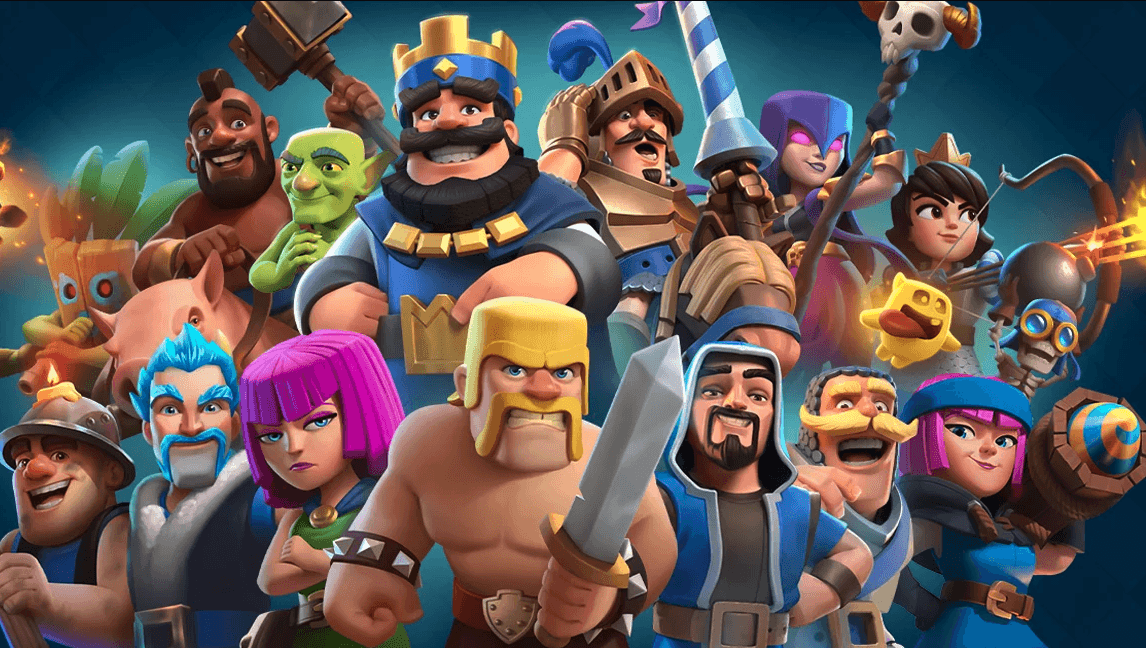
Supercell's Clash Royale launched as one of the most anticipated games in mobile gaming history, backed by a soft launch strategy that became an industry template. Supercell ran the game in Canada, Australia, and select other markets for months before global launch, using that window to validate monetization, balance the competitive meta, and generate the event data needed to optimize paid UA campaigns.
The subsequent global launch used extensive A/B testing and lookalike audience modelling to scale UA efficiently, reaching players with genuine interest in competitive strategy games rather than broad demographic spray. The creative strategy leaned into the game's rivalry mechanics, showing genuine gameplay that demonstrated the depth of the competitive experience. Clash Royale became one of the fastest games in history to reach $1 billion in revenue.
The lesson: patience in soft launch and rigor in creative testing are not cautious strategies, they are how you build a UA machine that can actually scale.
Among Us (InnerSloth), Organic Virality and the Second Wave
Among Us launched in 2018 to minimal fanfare. It sat largely dormant for two years. Then, in 2020, a small group of streamers on Twitch picked it up during lockdown, and the game exploded, reaching 500 million players within months without any paid UA spend to speak of. The conventional reading is that Among Us was 'lucky.' The more useful reading is that the game had two things in place that made a viral moment possible when it came: a social mechanic that only worked with groups of friends (creating inherent sharing pressure), and a price point of zero on mobile that removed every barrier to trial.
InnerSloth's marketing response to the second-wave explosion is equally instructive. Rather than immediately monetising the surge with aggressive paid UA or invasive ads, they invested in game quality, fixing long-standing bugs, adding new maps and roles, and communicating directly with their suddenly enormous community. That decision preserved the goodwill of the viral moment and extended the game's active life by years.
The lesson: when organic virality arrives, the marketing response that works is usually one that reinforces trust rather than immediately extracting revenue from it.
Key Metrics & KPIs Every Game Marketer Must Track
Metrics only matter if they are connected to decisions. The following are the KPIs that directly inform the most important choices in mobile game marketing, grouped by the stage of the funnel they reflect.
Acquisition Metrics
CPI (Cost Per Install): Your baseline cost efficiency metric. Always benchmark against your genre and geography, not global averages.
CPM (Cost Per Mille): The cost of reaching 1,000 impressions. A rising CPM requires either better creative (to improve conversion) or channel diversification (to access cheaper inventory).
IPM (Installs Per Mille): How many installs your creative generates per 1,000 impressions. The primary measure of creative efficiency.
Paid-to-Organic Ratio: For every organic install you earn, how many paid installs are you needing to generate? A rising ratio is a signal to invest more in ASO and community. A very high ratio (above 5) is a warning sign about organic health.
CTR (Click-Through Rate): Measures creative relevance. Low CTR means the ad is not stopping the scroll. High CTR but low IPM means the store listing is failing to convert.
Engagement and Retention Metrics
D1, D7, D30 Retention: The cohort health metrics that predict everything downstream.
Session Length: How long players stay in each session. Action games had the longest session lengths in recent industry data; strategy games posted the biggest year-on-year gains.
DAU / MAU Ratio (Stickiness): The proportion of monthly users who return daily. A ratio above 20% indicates a genuinely sticky product; below 10% is concerning for long-term LTV.
Sessions Per User Per Day: Measures habitual engagement. Small gains here compound significantly into monetization over a cohort's lifetime.
Monetization Metrics
ROAS (Return on Ad Spend): The primary UA health metric. ROAS windows should reflect how quickly your monetization actually pays back.
LTV (Lifetime Value): The north star metric. All UA and retention decisions serve LTV. Segment LTV by acquisition source, geography, and cohort to identify where your most valuable players actually come from.
ARPU (Average Revenue Per User): Useful for cross-cohort comparisons. A rising ARPU in an established cohort indicates successful monetization deepening; falling ARPU is an early warning signal.
IAP Conversion Rate: The percentage of players who make at least one in-app purchase. Small improvements here have outsized effects on ROAS and payback period.
Conclusion
Marketing is not a department you bolt on after the game is built. It is the system that connects your product to the players it was made for and, that system needs to be more precise, more measurable, and more integrated with product decisions than ever before.
The studios getting this right are the ones who know what a retained player is worth, test creative like it is a core function, and treat their store listing, their live ops calendar, and their attribution infrastructure as seriously as the game itself.
If you'd like to put together a framework that works, let's talk.
Frequently Asked Questions
What is mobile game marketing?
Mobile game marketing is the practice of attracting, converting, and retaining the right players for a mobile game through a combination of paid media, organic discovery, creative development, and data-driven measurement. It covers everything from App Store optimization before launch to re-engagement campaigns for lapsed players years later.
How do I market a mobile game with a small budget?
Start with ASO; it costs time rather than media spend, and permanently improves organic conversion. Build community early on Discord and genre-specific subreddits.
Focus paid spend on a single, well-understood channel rather than spreading thin across many.
Partner with micro-influencers on performance-based deals (cost-per-install or revenue share) rather than flat fees. Use soft launch data to identify the narrowest possible high-value target audience before scaling any spend.
How do I market a mobile game?
The practical sequence is:
establish your ASO baseline before any spend goes live;
run a soft launch in test markets to validate retention and monetization metrics;
build and test creative across 3–5 concepts before committing to scale;
launch UA campaigns on your primary channel and optimize for pLTV rather than raw install volume;
build live ops and re-engagement infrastructure to activate retained players and re-engage lapsed ones;
And expand channels and markets only once the core loop is proven.
What is the most effective mobile game marketing channel?
There is no universal answer; it depends on your genre, target demographic, and geography.
Meta remains the highest-reach channel for casual games. Google UAC performs well for broad reach.
TikTok is increasingly dominant for casual titles targeting under-35 audiences.
Mid-core and strategy titles often find strong ROI through programmatic DSPs.
The practical answer: test your top three candidate channels with equal rigor during soft launch, then concentrate the majority of the budget on the one or two that deliver the best player LTV.
What is the average cost per install for mobile games?
According to Adjust's 2026 Gaming App Insights Report, the global average CPI has risen 30% year-on-year. North America averages significantly more than LATAM or APAC markets.
Genre matters; premium genres like strategy and idle RPGs have higher CPIs than hyper-casual titles. Always benchmark against your specific genre and target geography rather than a global mean, which will almost certainly not reflect your actual situation.
What is the difference between a mobile game marketing agency and an embedded growth team?
A traditional agency operates separately from your studio; they receive a brief, run campaigns, and report results.
An embedded growth team operates as part of your studio, sitting inside your planning cycles, product discussions, and data infrastructure. The embedded model closes the feedback loop between marketing and product decisions, which tends to produce better retention outcomes and more efficient spend. Hubapps operates as an embedded growth partner rather than a traditional agency.
Should I use in-game advertising in my mobile game?
In-game advertising is one of the primary monetization models for free-to-play mobile games, and for many titles, it is the only realistic revenue stream early on. The format mix, rewarded video, interstitials, banners, and playables, should be chosen based on your genre, session structure, and player expectations. Rewarded video is almost always the safest starting point: players opt in voluntarily, sentiment impact is positive, and engagement rates are strong. Over-serving interstitials is one of the most consistent causes of player churn.
For a detailed breakdown of formats, placements, and revenue optimization strategy, see our guide to in-game advertising.
What are the key mobile game marketing trends to understand in 2026?
Six trends are most consequential right now:
AI-assisted creative production enabling faster testing and more localized variants at lower cost;
D2C web stores that bypass app store commissions are becoming viable for established titles.
live operations evolving from a game feature into a primary retention marketing channel;
cross-platform expansion connecting mobile, PC, and console player bases;
rising acquisition costs making precision targeting and LTV-based bidding non-negotiable;
and the hybrid monetization model, combining ads and IAP, is becoming the standard across casual and mid-core genres.

Mobile gaming UA specialist since 2011. A female pioneer in the industry, Maria has scaled games across every major platform and genre, from indie puzzle games to massive strategy titles. Known for straight talk and results that actually matter.
Share
Related Articles